My Gut-Brain Reset After Concussion - A Personal Story
Important: This is my personal story, not medical advice. I’m a licensed massage therapist in Iowa, and I can’t diagnose or prescribe. Everything below is a plan my own healthcare provider created for me. Please talk with your own provider before changing your diet or starting any supplement.
I spend my days helping other people’s bodies recover. This post is about my own.
I’ve been open with you before about my surgeries and the years of physical therapy that taught me so much about the body. Today I want to share something I’ve been living with more quietly: life after my last concussion, in 2021, and the new path my functional medicine nurse practitioner and I have started.
Life since my 2021 concussion
Some days, it feels like my body is running on a low battery that never fully charges. Since my concussion, I’ve been dealing with:
Fatigue, and muscles that tire out very quickly
Trouble falling asleep, and waking up in the middle of the night
Joint pain, and muscle injuries that happen far too easily
Getting out of breath quickly
Headaches
Balance problems and a feeling of instability
Anxiety
Feeling wiped out after I eat
Short-term memory loss
If you’ve had a concussion, some of this list may sound familiar. For a long time, I treated each symptom as its own problem. What I’ve learned this year is that they may be connected.
Looking at the whole picture
I’ve been working with my functional medicine nurse practitioner. Instead of looking at one symptom at a time, she looked at all of me.
We did a large blood panel and full workup. Then she combined those results with my genome results and the symptoms I’ve been living with every day. That’s the same whole-body approach I use on the table, just from the inside out.
A few of my results stood out:
My vitamin D was only 27, even though I’d been taking a vitamin D supplement.
My B12 was significantly low.
My iron was significantly low.
That vitamin D number made me stop and think. I was taking the supplement. So why wasn’t it showing up in my blood?
Why we’re starting with my gut
Based on everything she saw, my nurse practitioner’s plan is to focus on my gut first. We’re approaching it as leaky gut, meaning a gut lining that may not be doing its job well. A healthy gut lining lets nutrients in and keeps other things out. If mine isn’t absorbing well, that could help explain why my levels stayed low even with a supplement.
“Leaky gut syndrome” isn’t an official medical diagnosis yet. Cleveland Clinic describes the underlying idea, increased intestinal permeability, as real, but says research is still working out what it means (Cleveland Clinic). I share that because I want to be honest with you about where the science is.
What I find hopeful is the growing research on the gut-brain axis, the two-way communication between your brain and your digestive system. Researchers have found that brain injury can affect the gut, including the gut lining and how well nutrients are absorbed (a review on brain-gut axis dysfunction after brain injury). Much of this research is still early, and a lot of it comes from animal studies or more severe brain injuries (a 2024 review of the brain-gut axis in brain injury). But it helped me understand why a provider might look at my gut to help my brain.
Our hope is simple: if my body can absorb nutrients again, then we can work on the gut-brain axis and help my whole system function better.
What my plan looks like
My nurse practitioner put together a plan for me. I’m sharing it so you can see what this looks like in real life, not so you can copy it. Every person’s body, labs and history are different.
Foods and supplements she has me focusing on to support my gut lining:
Probiotics and prebiotics
Bovine colostrum
L-glutamine
Foods that support a healthy gut lining
Foods I’m staying away from for now, based on my own results:
Gluten
Regular drinking milk (cultured dairy like yogurt, kefir and cheese is okay for me)
Coconut
Avocado
I’m not listing amounts on purpose. My plan was built for my body and my blood work. Yours should be built for you, by your own provider.
My Sunday meal prep
Knowing what to eat and actually eating it are two different things, especially when you’re tired.
So I used AI to build a meal plan around my nurse practitioner’s guidelines. Then I spent a couple of hours on Sunday meal prepping, using foods and seasonings I actually like. Having meals ready to go means I don’t have to make decisions when my energy is low, and I’m much less likely to grab something that sets me back.
If you’ve ever been told “just eat better” while running on empty, you know how much a little planning helps.
The pill box that changed everything

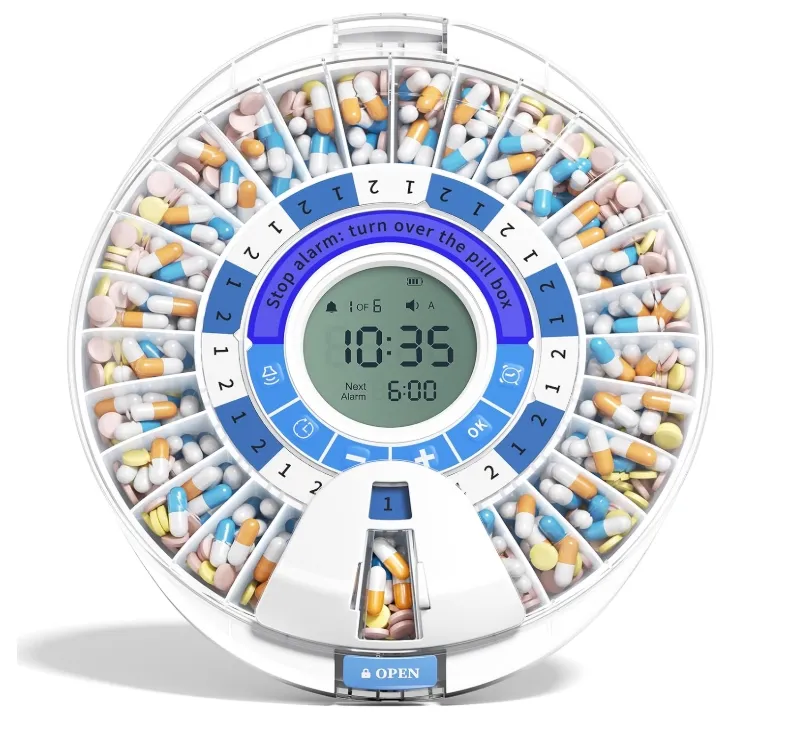
Here’s the part I’m a little embarrassed to admit. Because of my short-term memory loss, I couldn’t remember when to take my supplements, or whether I had already taken them. Some days I skipped them. Other days I wasn’t sure. That meant I was consistently not getting the support I needed.
So I got an alarm pill box. I can preload it up to two weeks at a time, and it goes off at the exact time I set. The alarm keeps going until I open the container and flip it over to take my supplements. No guessing, and no “did I already take those?”
As I write this, I’m on day 3 of taking my morning and evening supplements consistently, at the same time, every day. That might sound small. For me, it’s huge.
If you struggle with memory after a concussion, or you just have a lot on your plate, a tool like this can take one more thing off your mind.
What I’m hoping for
I’m not expecting overnight results. My hope is that a few months from now, with new routines in place, I’ll start to see things balance out: better sleep, steadier energy, fewer headaches, and a body that recovers the way it used to.
I’ll share updates as I go, the good and the hard.
How this connects to my work
Living this has made me even more grateful for the parasympathetic nervous system, the “rest and digest” side of the body. Your body heals, sleeps and digests best when it isn’t stuck in fight or flight. That’s a big part of why I work with the body, not against it, on the table.
It has also reminded me why I look at the whole body. The place you feel it isn’t always where it starts. That’s true for a tight hip, and it may be true for fatigue and headaches too.
To be clear, I don’t treat concussions or gut problems, and I can’t tell you what’s causing your symptoms. What I can do is care for your soft tissue, help your body settle, and work alongside your doctor, nurse practitioner and physical therapist.
If you’re still struggling after a concussion
If you’re months or years past a concussion and still don’t feel like yourself, please know you’re not imagining it. I’ve been there, and I’m still there some days.
Talk with your own healthcare provider about everything you’re experiencing, even the symptoms that don’t seem related. Bring a list. You know your body better than anyone.
And if you’d like soft tissue care as part of your support team, I’d love to see you. You can book your visit here or call 515-778-3100.
This article shares my personal experience only. It is not medical advice and is not meant to diagnose, treat or prescribe for any condition. As a licensed massage therapist in Iowa, I can’t diagnose or prescribe. My functional medicine nurse practitioner is my personal healthcare provider. She is not affiliated with Hands On Sports Therapy and has not reviewed or endorsed this article. Please talk with your own healthcare provider before making any changes to your diet, supplements or care.
